This article lays the foundations for a fundamental shift: contemporary painting can no longer be thought of as an autonomous image. In an era of continuous narrative universes, the work must become a fragment of a system. Storytelling Art is part of this transformation.
This article outlines a structural shift in contemporary painting: the autonomous image no longer organizes collective imagination. In a culture shaped by narrative ecosystems, painting must become part of a larger fictional system. Storytelling Art emerges from this transformation.
I. The necessary legacy of autonomy
For more than a century, modern painting was built around a principle that became almost indisputable: the autonomy of the image. The work had to be self-sufficient. The surface was its territory. Color was its syntax. Composition was its internal logic.
By freeing itself from narrative, painting asserted its sovereignty. It refused to be illustration. It refused dependence on text. It claimed its own legitimacy.
That moment was crucial.
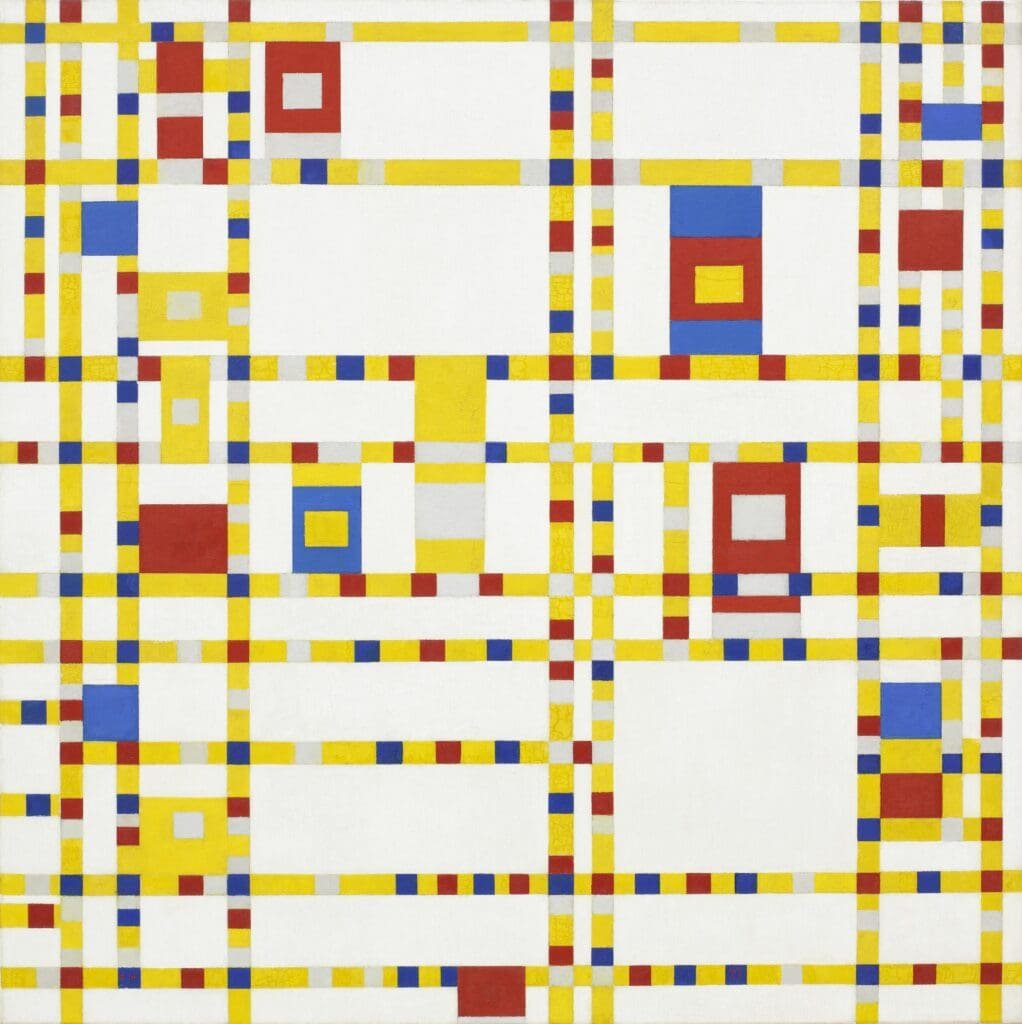
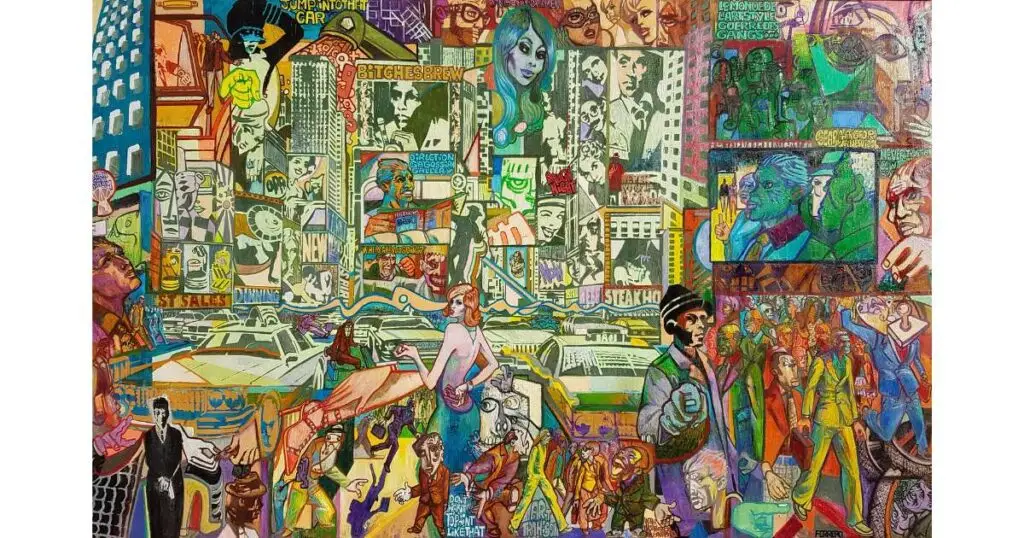
Piet Mondrian, Broadway Boogie Woogie, 1942–1943. Oil on canvas.
With Mondrian, pictorial autonomy reached its peak: the canvas functions as a closed system, entirely based on its own formal laws. Painting no longer needs narrative. It is sufficient unto itself.
I. The autonomous image in the contemporary world
Today, we no longer inhabit the same visual landscape. Our imaginations are structured by continuous narrative universes: series, franchises, sagas, immersive platforms, interconnected fictional worlds.
Images no longer exist on their own. They circulate within systems. In this context, the autonomous image does not disappear. But it ceases to organize the collective imagination. It becomes a fragment scattered within a flow.
Modernity has built autonomy. Contemporaneity requires structure.
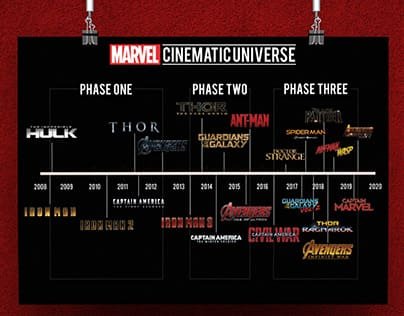
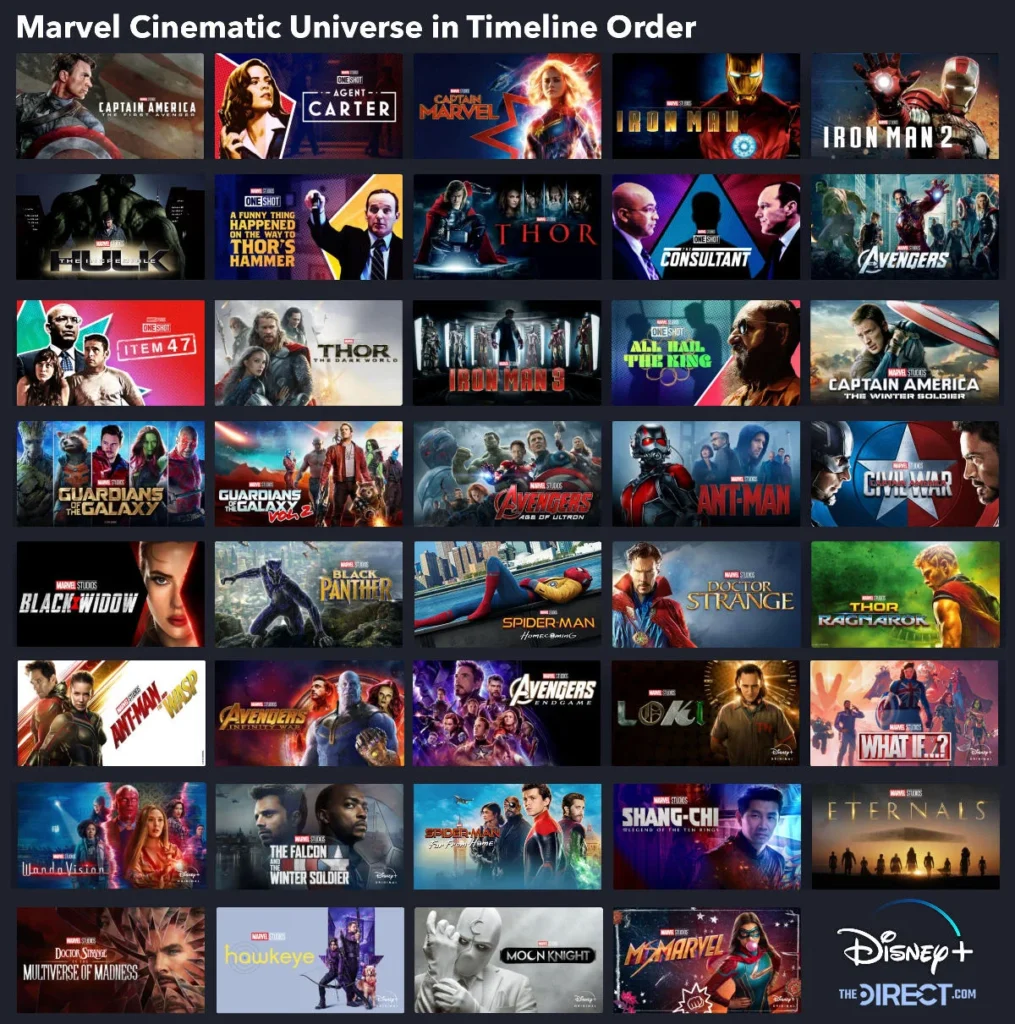
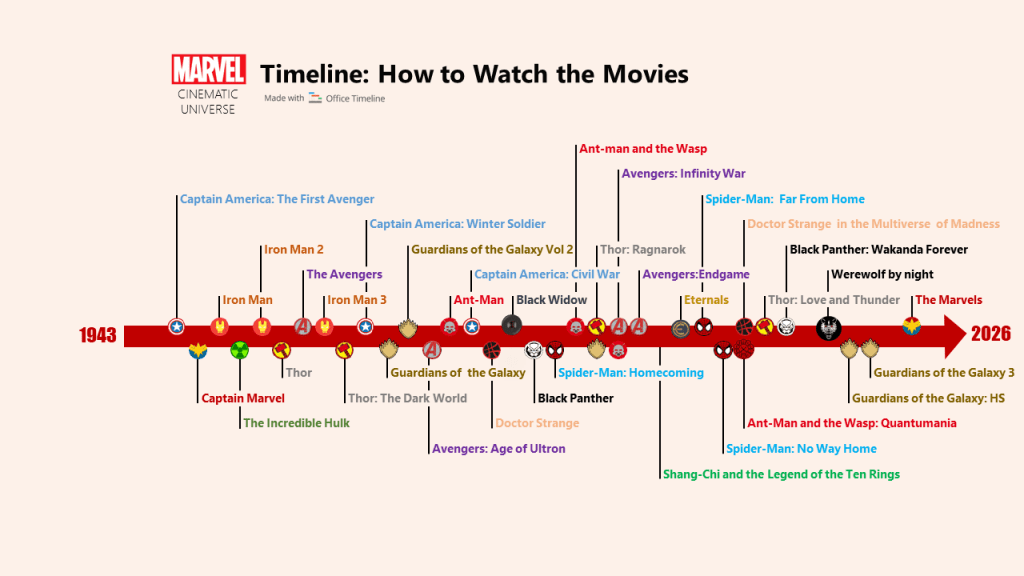
Marvel Cinematic Universe (since 2008).
Example of a structured contemporary narrative universe. The works do not function as isolated entities, but as fragments of a coherent system in which characters, temporalities, and narratives unfold across multiple media.
III. The necessity of relocation
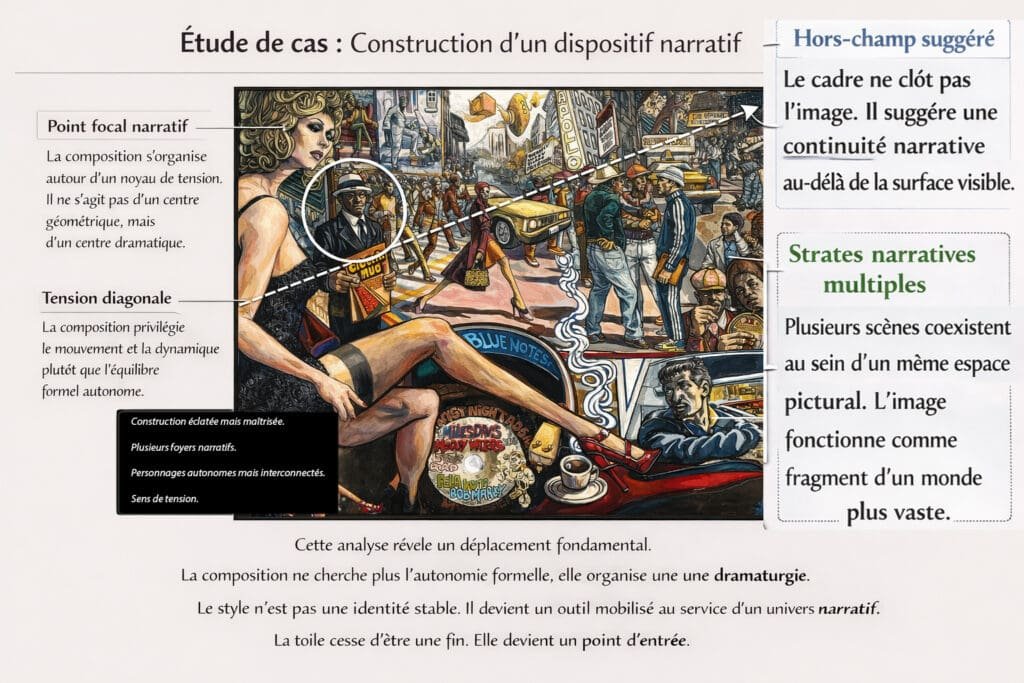
It is not a question of returning to illustration. It is not a question of subjecting painting to literature. It is a more radical shift: rethinking painting not as an isolated object, but as an entry point into a narrative universe. The canvas ceases to be an end in itself. It becomes a door.The work is no longer simply a plastic presence. It is a fragment of a larger world, explicit or latent. The work is no longer simply a plastic presence. It is a fragment of a larger world, explicit or latent. This shift changes the very logic of pictorial creation: Style is no longer an identity. It becomes a tool. Composition is no longer a formal balance. It becomes dramaturgy.
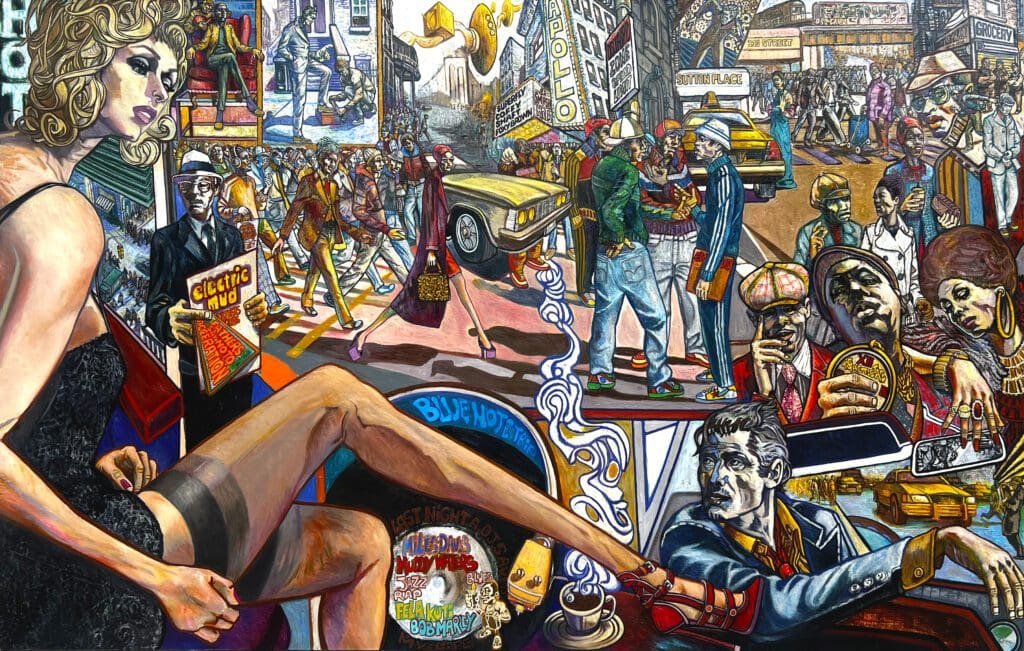
Marc Ferrero, Harlem in the Age of Acceleration, 2025. Oil on canvas, 260 x 162 cm
Here, style is not a fixed identity. It is used as a narrative tool. The composition does not seek formal balance in itself. It organizes a visual dramaturgy. Painting ceases to be an end in itself. It becomes the architecture of a world.
IV. Foundations of Storytelling Art
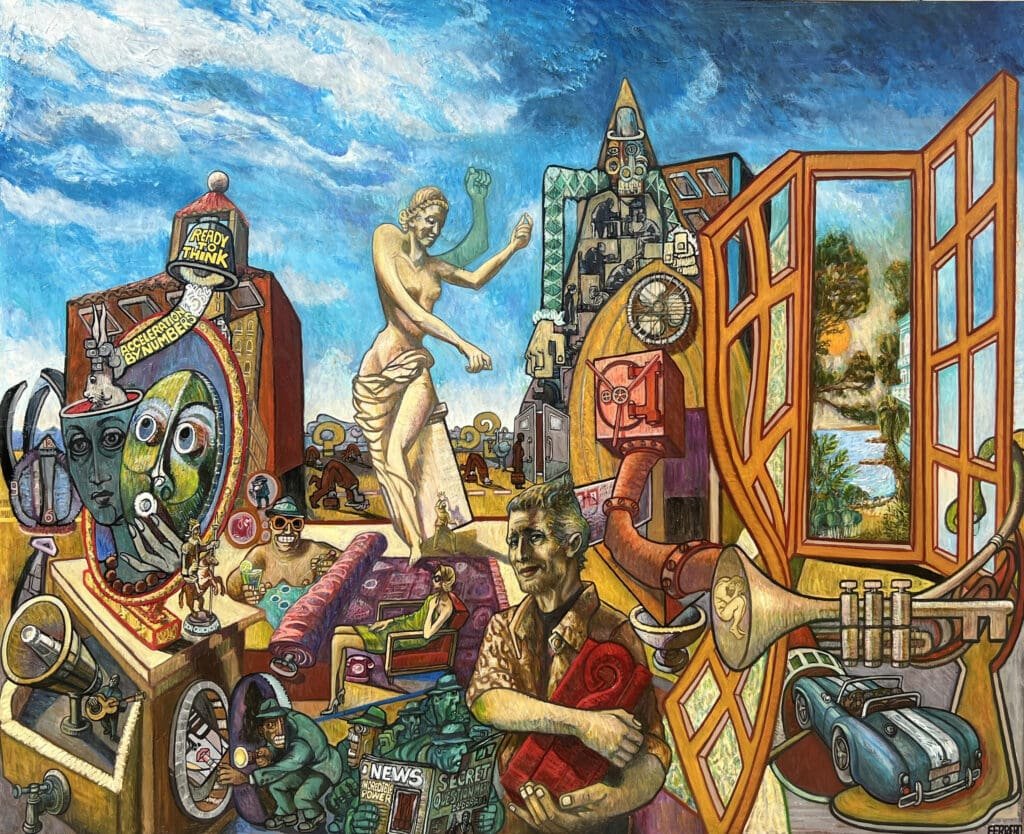
Storytelling Art was born out of this stance. It asserts that painting can regain its structuring power provided that it fully embraces its narrative dimension. Not by telling an illustrative story, but by constructing a system, a universe where the works dialogue with each other. Where characters appear across several canvases. Where the viewer is no longer faced with an image, but with a world.
In the age of instant images, painting can once again become slow, dense, architectural. Not by retreating into its autonomy, but by becoming a narrative structure.
And it is within this transformation that Storytelling Art finds its place.