Storytelling Art and the Structural Transformation of the Image
For over a century, artistic movements have functioned as identities.
Cubism. Surrealism. Abstraction. Pop Art.
Each defined itself in opposition to the other. Each built its own territory. Each claimed formal sovereignty.
The 20th century was a century of separations.
These breaks were necessary. They allowed painting to explore its limits, assert its autonomy, and conquer its freedom from narrative and illustration. But every historical conquest, once stabilized, becomes a framework, and every framework ultimately limits what it had liberated.
Movements as tools
The movements of the 20th century produced formal tools of exceptional power.
Cubism fragmented space. Surrealism unleashed symbolic collision. Abstraction radicalized rhythmic tension. Pop art threw the industrial image into crisis. These gestures were revolutionary, but today these revolutions have become categories. Style has solidified into signature. Signature has turned into product.
What was once a language has become a label.
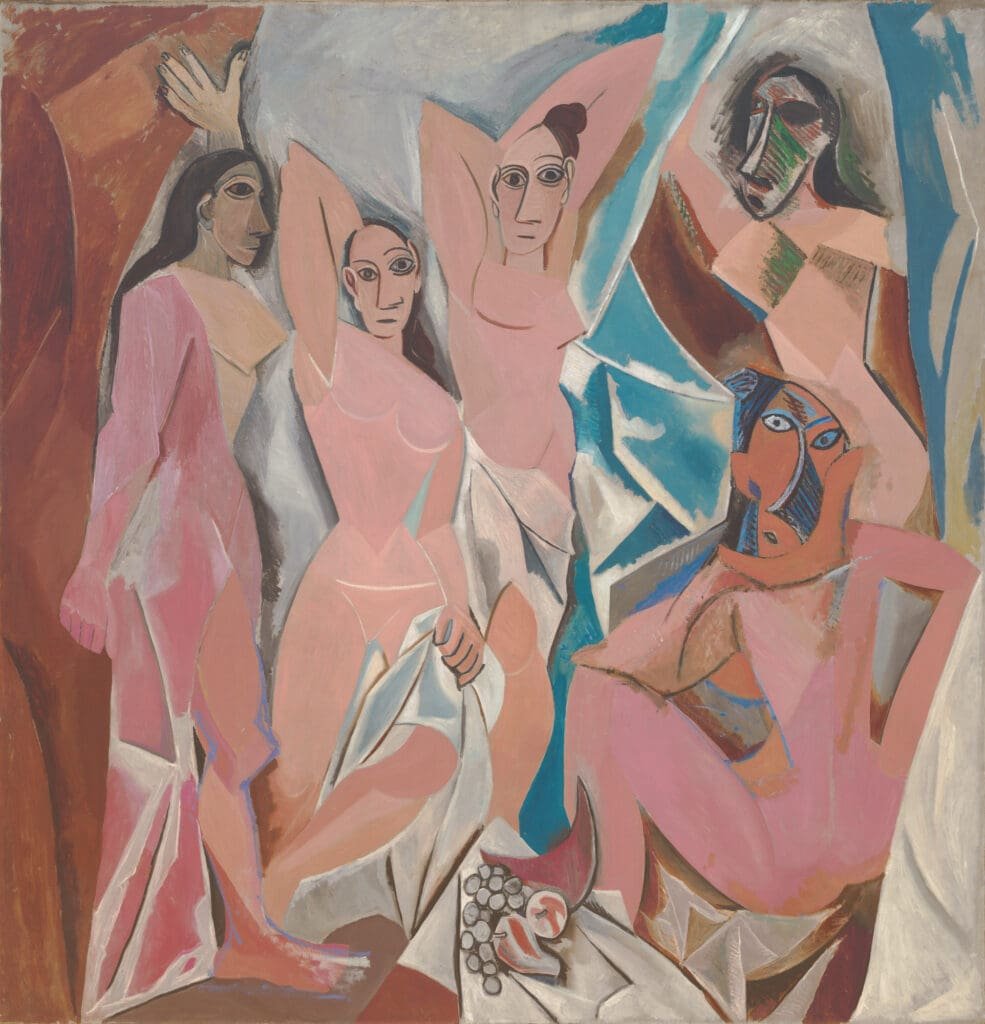
Les Demoiselles d'Avignon, 1907Pablo Picasso
With Les Demoiselles d'Avignon, Picasso broke with classical representation and inaugurated a new conception of pictorial space. The surface becomes a field of tension. The figure breaks down. Modernity asserts the formal sovereignty of painting here.
Fragmentation, multiplicity of viewpoints, breaking with traditional perspective: Cubism paved the way for radical autonomy of the surface.
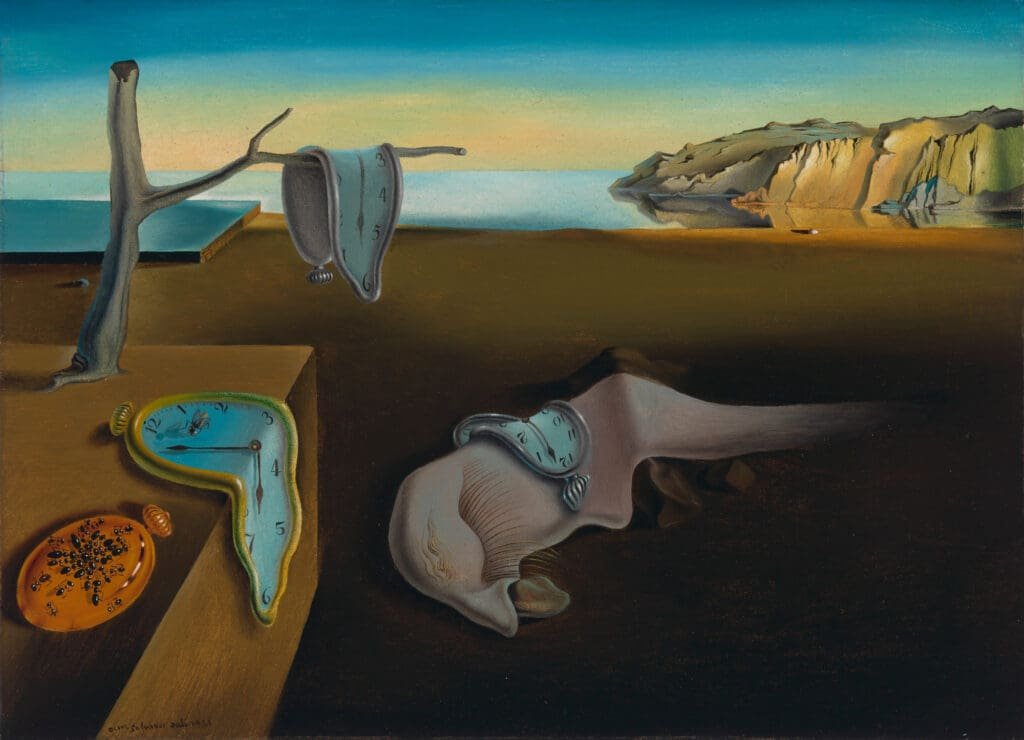
The Persistence of Memory, 1931 Salvador Dalí
With The Persistence of Memory, Dalí brings the unconscious into the pictorial space. Time liquefies. Reality is disrupted. Surrealism unleashes the symbolic collision at the heart of painting.
Surrealism does not seek formal balance, but psychological tension. The image becomes a place for mental projection.
A transformation of the visual landscape
We now live in a world structured by continuous narrative universes.
Series. Franchises. Transmedia mythologies. Ecosystems of interconnected images.
The collective imagination is no longer built around isolated images, but around systems. In this context, the autonomous image does not disappear, but it ceases to organize the narrative of the world.
Modernity has separated. Contemporaneity recombines.
Merger as a method
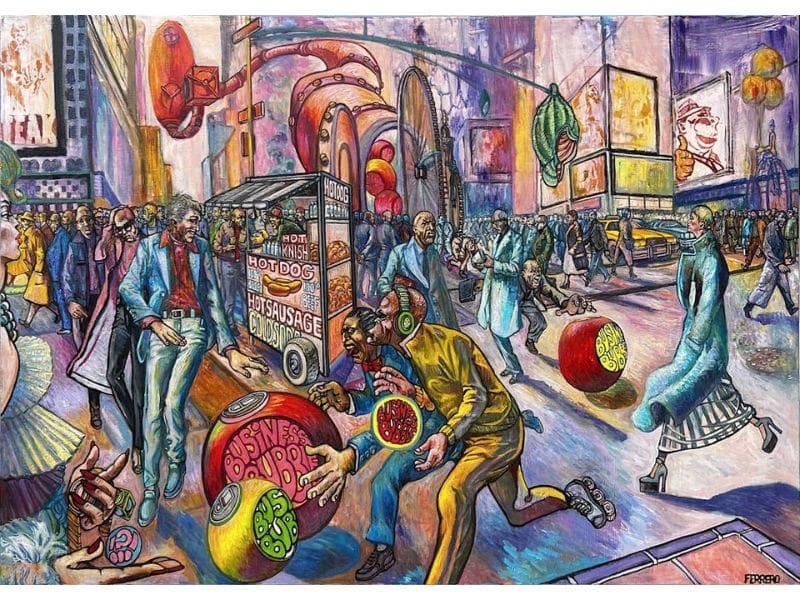
This is where Storytelling Art comes in. Not as an additional style. Not as a school. But as the formalization of a structural shift. In Marc Ferrero's work, the movements of the 20th century cease to be exclusive identities. They become resources.
Cubism is no longer a belonging; it becomes a tool for narrative fragmentation.
Surrealism becomes a tool for psychological tension.
Pop art becomes a tool for symbolic diversion
Abstraction becomes the rhythmic driving force behind the dramaturgy.
This fusion is not juxtaposition, it is orchestration.
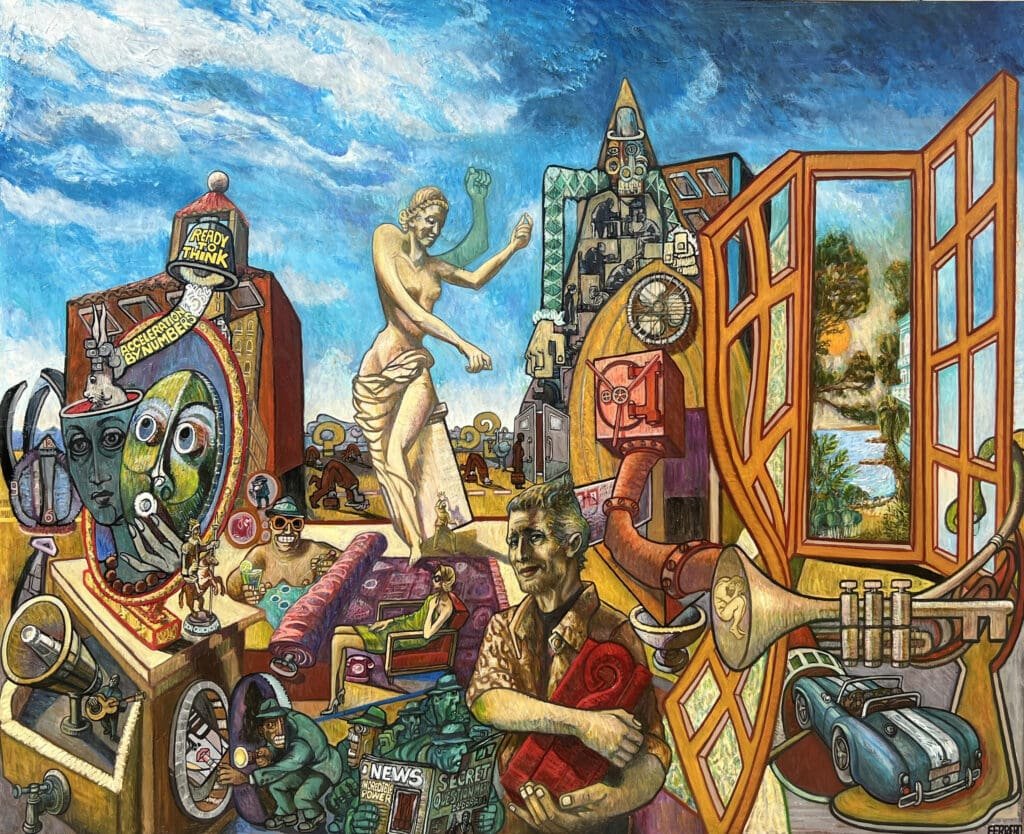
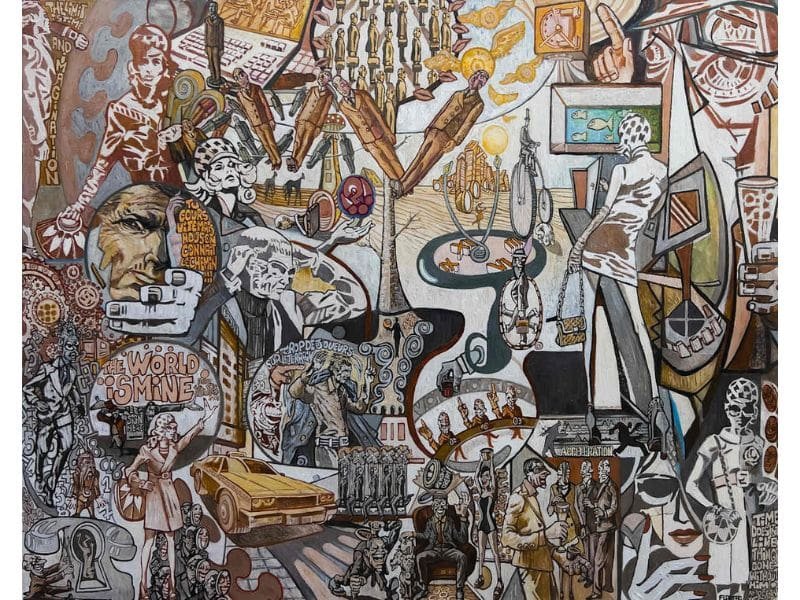
Marc FERRERO “Acceleration and Fall of Idols,” Oil on canvas, 162 x 130 cm, 2022
In this work, painting ceases to be an isolated image and becomes a narrative architecture. The visual registers of the 20th century—cubist fragmentation, surrealist symbolism, graphic tension, cinematic figuration—do not coexist as stylistic references, but as tools integrated into a unified structure.
The window becomes a metaphor: the canvas is no longer an end, but a passage.
Here, style is no longer an identity. It becomes a language at the service of a world. All the great languages of the 20th century run through this work. Not to be quoted, but to be recomposed. Painting no longer chooses a school: it mobilizes an entire heritage to construct a world.
From image to universe
Storytelling Art does not propose a return to illustration. It does not subject painting to text. It does not dilute the surface in the narrative.
He reconfigures the internal logic of pictorial creation; autonomy is not abolished, but integrated into a larger structure.
This shift corresponds to a profound cultural change: the transition from isolated images to narrative systems.
In this sense, Storytelling Art, as developed and theorized by Marc Ferrero, does not constitute an additional aesthetic in the history of contemporary art.
It formalizes a transformation.
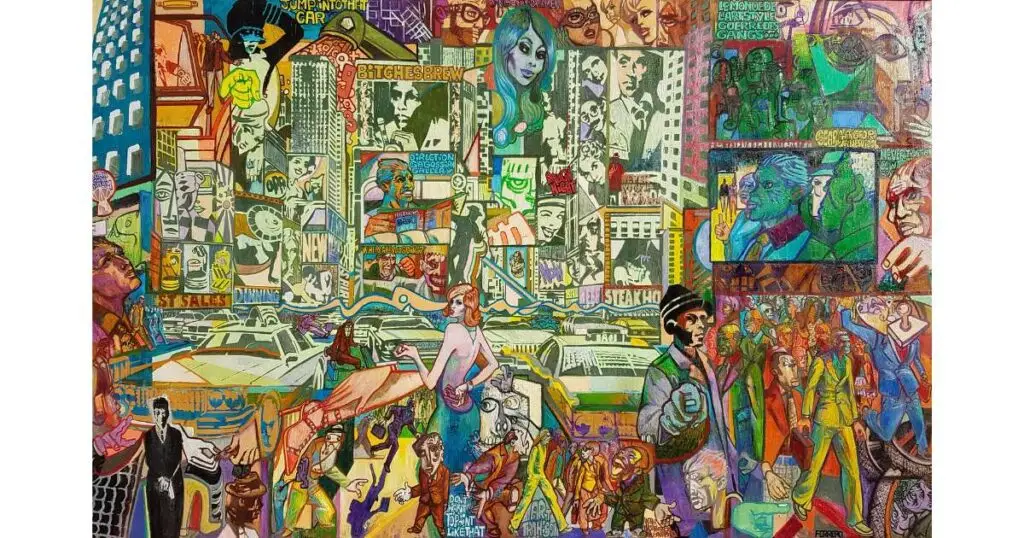
Marc FERRERO, “Too many players on the field” Oil on canvas 162x 130 cm 2025
This work does not function as a single scene, but as a system in motion. The figures, symbols, and visual fragments compose a narrative network in which each element refers to another.
The multiplication of scenes, the compression of time frames, and the circulation of gazes produce a logic similar to that of extended contemporary universes.
Painting no longer merely represents. It organizes. It structures. It constructs a world.
The fragmentation of space inherits from cubism. Symbolic collisions extend surrealism. Rhythmic tensions borrow from abstraction. Chromatic intensity dialogues with expressionism. Graphic and iconic signs summon pop art.
But none of these movements dominates: they are integrated into an overall orchestration where style becomes a tool rather than an affiliation.
conclusion
The 20th century produced languages. The 21st century reactivates them as tools.
In order to continue telling the story of the world, painting cannot simply repeat inherited categories; it must recompose. In this recomposition, Storytelling Art appears not as a stylistic variation, but as a structured response to the evolution of the contemporary image.
Modernity has asserted autonomy. Contemporaneity demands architecture.
And it is in this space that Marc Ferrero's work fits in.